
You’re spending money bringing people to your Shopify store, but sales aren’t keeping up. Customers browse products, ask questions, and sometimes add items to their cart. Too many leave before placing an order.
Meanwhile, your team is working around the store’s limitations. A promotion needs a developer. An app creates another monthly bill. Product information is scattered across the page, and you’re unsure which changes would actually help.
You know something needs attention. The difficult part is deciding what to fix and who to trust with it.
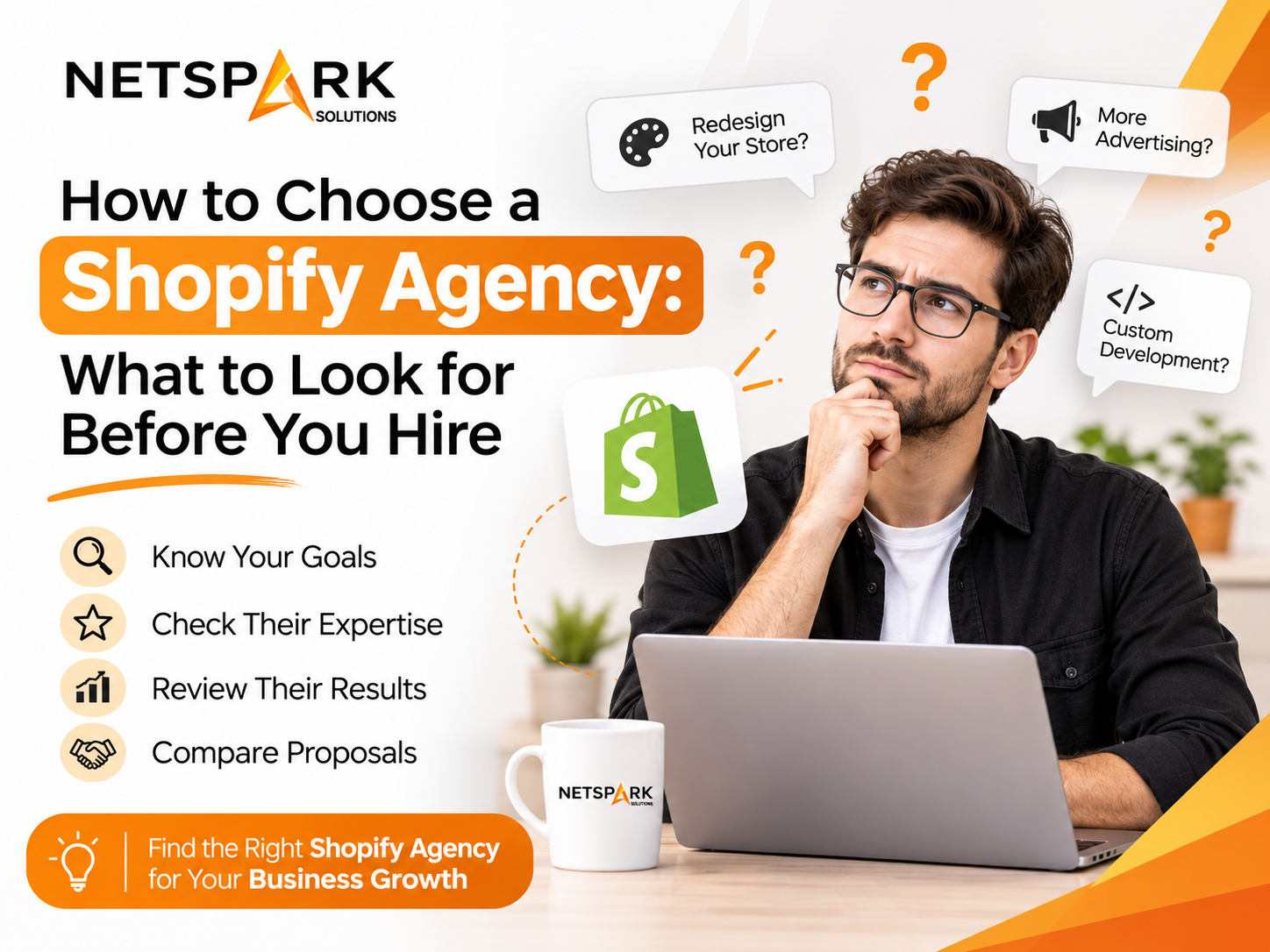
One agency recommends a redesign. Another suggests more advertising. A third proposes custom development. Before committing your budget, you need to understand which recommendation addresses your problem.
That’s where knowing how to choose a Shopify agency helps. This guide explains what an agency can do, what to check in its work, and how to compare proposals before you hire.
How to Choose a Shopify Agency
Choose an agency whose experience matches the work your store needs. Check comparable projects, ask for evidence behind its recommendations, and compare written proposals covering the same requirements.
Before signing, confirm the people doing the work, total costs, account ownership, testing, and support after launch.
The selection process comes down to seven steps:
- Define the problem and the outcome you want.
- Identify the Shopify skills the work requires.
- Shortlist agencies with relevant projects.
- Check their results and speak to client references.
- Review the reasoning behind their recommendations.
- Compare deliverables, responsibilities, and first year costs.
- Agree on launch requirements, ownership, and support in writing.
What Does a Shopify Agency Do?
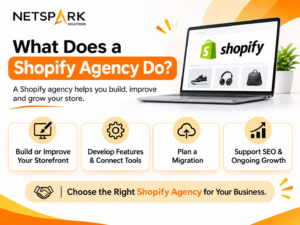
A Shopify agency works on the parts of your store that need specialist attention. That might mean building the storefront, improving how customers shop, moving your business from another platform, or connecting the systems your team uses every day.
The work should follow your needs. Here’s what that can involve.
Build or Improve Your Storefront
An agency can set up a new store, customize a theme, and build product, collection, and landing page layouts. For an existing store, it can review navigation and page content to identify where shoppers struggle to find information or choose a product.
For example, an apparel store might need clearer size guidance and easier variant selection. A beauty store might need ingredients, usage instructions, and product comparisons presented more clearly.
Develop Features and Connect Business Tools
Some stores need bundles, subscriptions, product customization, or connections to inventory and fulfillment systems. An agency can assess available options and implement a suitable approach.
Ask how the feature will work after a purchase as well as before it. A bundle that looks simple on the product page still needs to behave correctly when stock changes or a customer returns an item.
Plan and Carry Out a Migration
Moving to Shopify involves decisions about product data, customer records, content, URLs, and existing functionality. An agency can document what needs to move, check what the destination supports, and test the result.
You should receive a clear explanation of what will transfer, what needs a different approach, and how issues will be handled around launch.
Support SEO, Conversion, and Ongoing Improvements
Depending on its team, an agency may also improve search visibility, investigate purchase barriers, validate analytics, or manage marketing activity.
These services aren’t automatically included in a development project. Ask which specialists are assigned and which deliverables you’re paying for.
| What your store needs | Work to discuss with an agency |
| A first store launch | Theme setup, product organization, essential pages, and training |
| Better shopping journeys | Navigation, product information, mobile usability, and testing |
| A move to Shopify | Data mapping, content transfer, redirects, and validation |
| Less manual work | Integrations, workflow review, and exception handling |
| More relevant organic traffic | SEO research, page improvements, implementation, and reporting |
| Continued improvements | A prioritized work plan, clear ownership, and regular reviews |
Some agencies cover several areas. Others focus on one. Choose based on the team and work included in your proposal.
1. Decide What You Need Help With
Before contacting agencies, write down what’s happening, what you want to improve, and what evidence you have. A specific brief makes proposals easier to compare and helps avoid unnecessary work.
Don’t be too vague. “We want to improve our store” doesn’t give an agency much to work with.
Try being specific:
We’re getting good traffic from our paid campaigns, but mobile visitors aren’t converting well. Our customers are also asking basic questions about sizing and delivery. We want to investigate these barriers and prioritize improvements before our next promotion.
This gives the agency a few clear areas to investigate.
Your brief should also include:
- Your store URL and business model.
- What you want help with.
- Available analytics and customer feedback.
- Essential features and integrations.
- Your budget range and preferred deadline.
- Who will provide content and approvals.
- What must be included at launch.
Separate what the agency will deliver from your business goals. It can commit to developing agreed templates and validating purchase tracking. Your sales, however, will also depend on pricing, demand, traffic quality, stock, and your offer.
This helps both sides set realistic expectations.
Your current stage also matters. A first launch needs a clear, manageable scope. An established store may need targeted improvements while preserving what works. A business moving platforms needs a team that can plan around existing orders, content, and operations.
Tell agencies which situation applies to you. It will help them explain where your budget should go first.
2. Check Experience With Stores Like Yours
The agency should have experience solving problems like yours. Its portfolio should show what it contributed, how complex the work was, and the thinking behind its decisions.
A beautiful fashion store doesn’t necessarily demonstrate experience with subscription payments or a complex wholesale catalog.
Look for similarities in how the stores operate:
- Apparel stores may need clear sizing and variant selection.
- Beauty brands may need ingredient information and routine guidance.
- Subscription stores may need recurring order management.
- Large catalogs may need useful filtering and organization.
- Wholesale stores may need different ordering processes.
- Stores moving platforms may need careful handling of data and URLs.
Ask the agency to walk you through a relevant project. What was the starting point? What did it change? What was its responsibility?
Also confirm whether the same team will work on your project.
A useful follow up question is:
“What would you do differently if you were starting that project today?”
A thoughtful answer can show what the team learned and which compromises it had to make.
3. Ask What the Case Study Results Actually Mean
A good case study tells you what the agency started with, what it did, how long the work took, and what the outcome was. If it claims to have increased revenue or conversions, ask for context.
For example, suppose a store’s revenue increased from $40,000 to $60,000 per month after a redesign. That’s a 50% increase. But if advertising spend also tripled, the revenue figure alone doesn’t tell you whether the business became more efficient.
Ask:
- Which period was measured?
- What was the starting point?
- What did the agency change?
- Did advertising, pricing, promotions, or stock change?
- Which data source was used?
- What can reasonably be attributed to the project?
If the agency claims to have improved conversions, ask whether it ran a controlled test, such as an A/B test, or compared results before and after the changes. These approaches provide different levels of confidence.
If possible, speak to a relevant client. Ask about delivery, unexpected costs, communication, and the quality of the handover.
A particularly useful question is:
“What did your team still have to fix or figure out after launch?”
This can reveal responsibilities or gaps that haven’t been mentioned in the proposal.
4. Look for Recommendations Backed by Evidence
A good Shopify agency will research your store before making recommendations. It should explain the problem, the evidence behind it, the proposed work, and how success will be measured.
During discovery, notice what the agency asks.
Does it ask about your customers, margins, product objections, existing systems, and internal capacity? Does it also ask what’s working?
Or does it jump straight into recommending a full rebuild?
If you’re struggling with sales, there could be several reasons. Your product information might be unclear. Shipping costs could be unexpected. Traffic might be poorly matched to your offer, or customers may struggle to select a variant.
Some of these issues could be addressed through a redesign. Others need different work.
Ask the agency:
- What do you know so far?
- What remains unclear?
- What will you investigate?
- What will you leave until later, and why?
For a complex project, you may want to pay for discovery. Make sure it produces something useful, such as an audit, requirements document, prioritized recommendations, or implementation scope.
You should know exactly what you’re paying for.
5. Try the Agency’s Work on Your Phone
Check whether the agency’s work makes it easy for customers to find, understand, and buy products. Test a few stores from its portfolio on your phone.
Can you find a relevant product, compare options, select a variant, check delivery information, and update your cart?
As you browse, consider:
- Is the store easy to navigate?
- Do product pages answer common questions?
- Are prices and options easy to understand?
- Is delivery and return information easy to find?
- Do popups get in the way?
- Are buttons and forms easy to use?
- Do error messages explain how to fix the issue?
Ask how the agency identifies barriers to purchase. Useful inputs may include customer support messages, usability testing, analytics, and behavior analysis with appropriate privacy controls.
Also ask how it checks accessibility. Does it consider keyboard navigation, labels, focus visibility, and contrast?
Finally, ask how it prioritizes improvements. A long list of suggestions is less useful than clear reasons for focusing on particular issues.
6. Understand What You’ll Be Managing After Launch
Make sure your team can manage the finished store. For key features, ask why the agency recommends native functionality, an app, theme development, or a custom solution. What will the chosen approach cost over time?
There should be a business reason for technical complexity.
An Existing Theme or a Custom Build?
Ask the agency to show which requirements an existing theme can meet and where additional development is needed. Compare that with the proposed custom build: what does the extra work give you, and who will maintain it?
A useful proposal identifies the specific limitations it needs to solve. The ability to build something custom is only part of the decision; your team also needs to operate it.
If the agency suggests custom development, ask:
- Why is it necessary?
- Have you considered simpler options?
- Who will maintain it?
- What happens if connected systems change?
- Which updates can we make ourselves?
For a product bundling feature, ask how the solution will handle stock, discounts, fulfillment, returns, and reporting.
Request a demonstration of everyday store management tasks. Can your team update a banner, product information, a landing page, or a promotional section?
If the agency suggests a headless storefront, ask which requirements justify the extra development and maintenance.
The team should explain its recommendations in simple terms so you can plan your budget and resources.
7. Agree on SEO, Tracking, and Launch Checks
If your project changes pages, content, navigation, or URLs, agree on who will handle SEO and measurement. These responsibilities should be included in the project scope.
For a redesign or migration, ask:
- Who will identify the important existing pages?
- Who will set up redirects?
- Who will preserve or improve relevant content and metadata?
- Who will update internal links?
- Who will check indexing signals?
- Who will validate tracking before and after launch?
- Who will monitor issues?
Also agree on a launch checklist your team can review. Include representative products and variants, discounts, delivery options, order notifications, and connected systems. Identify who signs off on each part and what happens if a critical issue is found.
For ongoing SEO, ask what the agency will actually do. Will it work on collection pages, product content, editorial planning, technical fixes, implementation, and reporting?
Agree on who will establish the baseline, which data will be reported, and who will check key events. Ask how the team will investigate discrepancies between Shopify, analytics, and advertising platforms.
If the agency offers AI search visibility services, ask how it will make your content useful and easy to find. How will it report results without overstating what the data shows?
8. Compare What’s Included in the Price
Compare proposals and calculate how much each option will cost in the first year. The project fee may exclude tools, content, ongoing support, or additional implementation.
A lower quote may cover fewer templates or exclude migration and training. A higher quote may include those items, or it may simply charge more for the same work.
Use a checklist to see what each proposal includes.
| Proposal item | What to check |
| Discovery | Research, requirements, and planning outputs |
| Design | Number of templates, page types, responsive layouts, and revisions |
| Development | Features, integrations, and what your team can edit |
| Content | Who writes, supplies, uploads, and approves it |
| Migration | Data types, quantities, exclusions, and validation |
| SEO | Redirects, content, checks, and monitoring |
| Measurement | Tracking setup, validation, and reporting |
| Launch | Testing, approvals, and responsibilities |
| Handover | Training, documentation, files, and account access |
| Support | Duration, cost, coverage, and response times |
If you run a US business, ask for pricing in USD and confirm the payment milestones.
A useful way to calculate your budget is:
First year cost = project cost + 12 months of recurring costs + planned extra work.
Use the same formula for every proposal. Keep advertising spend and other business expenses separate from agency costs.
Ask how changes are charged. You should receive an estimate before any extra work begins.
9. Meet the Team and Confirm Support
Before signing, confirm who will deliver the work, how communication will be handled, and what ownership, handover, and support arrangements apply.
Speak to the person who will manage your project. Who will handle design, development, SEO, analytics, and quality assurance?
If contractors are involved, ask who will manage them and who remains responsible for the work.
For an overseas agency, confirm overlapping hours in your time zone, availability for meetings, and holiday coverage.
Make sure your business retains control of key accounts. The agreement should explain ownership and access for the store, domain, analytics, advertising accounts, code, design files, and third party licenses.
Shopify offers collaborator access that you can manage in your admin. Ask which permissions the agency needs instead of sharing the store owner’s login.
There are three types of support to clarify:
- Bug fixes: Correcting delivered work that doesn’t meet the agreed requirements.
- Ongoing maintenance: Keeping agreed systems working.
- New development: Adding or changing functionality.
Ask what’s included, for how long, and at what cost. How are incidents classified, and what response times apply?
Acknowledging an issue within two hours doesn’t necessarily mean fixing it within two hours.
Questions to Ask Before Hiring a Shopify Agency
Use these questions during your final interviews. Request examples or documents where relevant.
| Question | What to look for |
| Why is your solution suitable for us? | A clear link between requirements, evidence, and recommendations |
| Can you walk us through a similar project? | Clear responsibilities, limitations, and outcomes |
| What could cause delays? | Dependencies and how they will be managed |
| What isn’t included in your quote? | Specific exclusions and assumptions |
| How will our staff manage the store? | A demonstration, training, and documentation |
| How will you test the work? | Test scenarios and acceptance criteria |
| How will you measure success? | A baseline, metrics, data sources, and limitations |
| What happens if we change agencies? | Clear ownership, access, and handover arrangements |
A good answer won’t guarantee everything. It will give you a clear picture of the agency’s capabilities, limitations, and responsibilities.
How to Compare Your Final Shortlist
A scorecard can help you compare agencies consistently.
The weights below are suggestions. Adjust them to fit your project.
| Criterion | Suggested weight |
| Understanding your problem | 20% |
| Relevant experience | 20% |
| Credible results and references | 15% |
| Technical approach and maintainability | 15% |
| Scope and cost transparency | 10% |
| Team and communication | 10% |
| Ownership, launch, and support | 10% |
Score each category out of five. Multiply the score by the weight, then divide by five.
For example, a score of four in a category with a 20% weight earns 16 points. Add the points to get a total out of 100.
Note the evidence behind each score. If information is missing, wait for an answer before making a decision.
The scorecard helps organize your thoughts. If an agency lacks an essential capability or offers ownership terms you can’t accept, strong scores elsewhere shouldn’t outweigh that concern.
Warning Signs to Check Before You Sign
Be wary of agencies that:
- Guarantee revenue, rankings, or AI Overview inclusion.
- Recommend a rebuild without understanding the problem.
- Present results without comparison dates.
- Can’t tell you who will do the work.
- Are vague about costs, assumptions, and exclusions.
- Avoid explaining their testing process.
- Can’t show how your staff will manage content.
- Leave ownership and exit arrangements unclear.
- Promise unlimited support without defining what it includes.
One concern may have a reasonable explanation. Several unresolved concerns should influence your decision.
FAQs
How do I choose a Shopify agency for a small business?
Choose an agency that can work within your budget, understands your immediate problem, and offers a manageable scope. Check its relevant experience, recurring costs, staff training, and support. A focused project may be better suited to your business.
Should I use a Shopify agency or a freelancer?
A freelancer may suit a specific task that needs one area of expertise. An agency may be a better fit if design, development, SEO, and analytics need to work together. In either case, compare the people assigned to your project, their experience, availability, and responsibilities.
Does my Shopify agency need to be in the US?
No, but check that it has experience working with US customers. Ask about overlapping hours in your time zone, billing currency, and support. Consider how well the team communicates during selection and whether its availability will work for you.
How much does a Shopify agency cost?
The cost depends on scope, catalog complexity, design requirements, integrations, migration, and ongoing services. Ask for detailed quotes and compare the expected first year costs, including recurring tools and support.
Is being a Shopify Partner enough to decide?
Shopify Partner status can help you assess a provider, but also review its relevant experience, references, team, and proposal. Verify its current claims and choose based on the capabilities your project needs.
Should I redesign my Shopify store to increase sales?
Investigate the problem first. Low sales could stem from traffic quality, unclear product information, pricing, delivery expectations, usability, or measurement issues. If the evidence supports a redesign, ask which problems it would solve and what alternatives the agency considered.
How long will a Shopify agency project take?
The timeline depends on scope, content readiness, catalog size, integrations, migration, and approval speed. Ask for a milestone schedule that includes agency tasks and anything dependent on your team. Confirm the time allowed for testing and what could affect the launch date.
What should a Shopify agency proposal include?
It should explain the problem, recommended solution, deliverables, exclusions, timeline, team, costs, payment milestones, testing, ownership, and support. It should also state what you need to provide and how extra work will be approved.
Choose an Agency You Can Work With After Launch
Before you hire, picture an ordinary month after the project is finished. Your team needs to change a promotion, add products, review performance, and get help when something goes wrong.
Do you know what you can manage yourself? Do you know who to contact, what support costs, and how the next improvements will be prioritized?
Those answers matter alongside the proposed design. Ask for them before you commit, while you can still compare your options.
Need help deciding what to improve in your Shopify store? Share your store URL, current issues, and business goals with NetSpark Solutions. We can discuss your development, SEO, and conversion priorities.